
Concerns about affordability, displacement, and community suppression fuel debate amongst City of Yes advocates and community board members throughout the city.
By, Devyn Novikoff
November 13, 2024
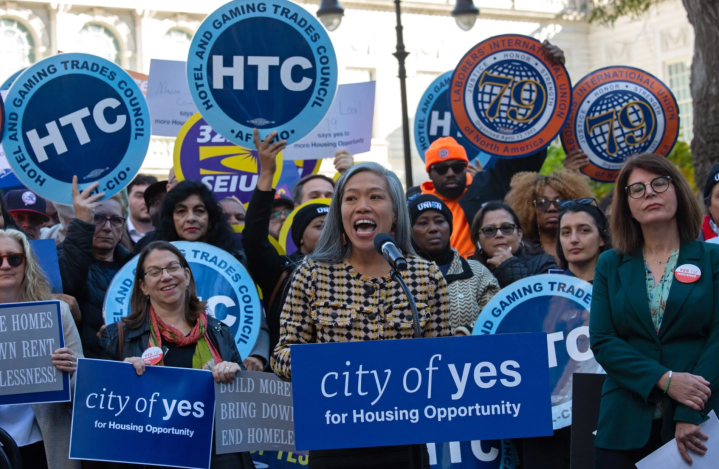
The New York City Council has not reached a consensus on Mayor Eric Adams’ “City of Yes for Housing Opportunity” proposal, prompting mixed reviews across City Council, community boards, and constituents.
City Council intends to vote on City of Yes, Adams’ city-wide housing development proposal, by the end of 2024 after two public hearings in late October. The comprehensive policy aims to increase housing production and affordability amid the citywide shortage. The plan will update citywide zoning laws that have remained largely unaltered since 1961, fueling criticism from opponents.
“We’re facing a housing crisis in the city,” City Council Member Keith Powers said. “It is undermining the city’s primary goal of always offering new opportunities to people from wherever you may be to come here and make this your home.”
Housing supply and affordability have become more prevalent concerns. Rental vacancy rates are at a historic low of 1.4%, while 50% of renters spend more than one-third of their income on housing, according to the city’s Department of Housing Preservation and Development.
Right now, “even people who make very good livings are at risk of being pushed out of their apartments,” said Richard Mintz, the housing committee chair on Manhattan Community Board 6, which represents the East side of Manhattan from 14th to 59th Sts.
“New York’s great promise has always been that it’s a constantly updated and modernizing city that welcomes everyone in its doors, and we have to have a housing plan that needs that spirit,” Powers added.
The Adams administration projects that the City of Yes will result in the development of 58,000 to 100,000 new housing units by 2039. This plan addresses the “fairly obvious” idea that the housing shortage is citywide and, therefore, cannot be solved on a localized basis, Powers said.
Despite endorsements from certain Council members, City of Yes faces resistance from community boards and residents in lower-density boroughs like Queens and Staten Island. Out of the city’s 59 community boards, 34 oppose the plan, according to the Department of City Planning.
Corey Bearak, Queens Community Board 13 member and City of Yes critic said, communities should determine housing development on a case-by-case basis rather than blanket citywide policy. The city needs to “empower” community boards rather than undermine their review process to impose development on communities that lack the necessary infrastructure, he added.
“With all due respect, the communities have a better sense of what makes sense in their community, and they know their communities, this is a top-down [policy],” Bearak said. “This is not a dictatorship; we are a democracy.”
Powers disagreed, saying The City of Yes mantra is “A little more housing in every neighborhood,” designed for incremental change to help curb the shortage so “no particular neighborhood gets asked to completely radicalize their community overnight.”
Despite community board resistance, 80% of New Yorkers support the plan. The discrepancy can be attributed to the “disproportionately” affluent and older residents serving on community boards who don’t look toward the “future of the city,” Mintz said.
“There is a long history of experience in this city where communities have had to fight a very uphill battle against development in their own communities and are wondering how this proposal will impact them or affect their community,” Powers said.
According to Council Speaker Adrienne Adams, the City Council will develop a “housing action plan” to augment City of Yes that guarantees affordability and alleviates other community concerns before finalizing their vote.
“I recognize that folks who have been part of this conversation for a longer time may have some level of distrust about exactly what this might mean or have some real questions about it, and we have to address those,” Powers said.
 Devyn Novikoff