
After over a decade of neglect, empty reform, and abuse, the city has lost its right to control its largest jail.
Opinion
By, Devyn Novikoff
September 23, 2023
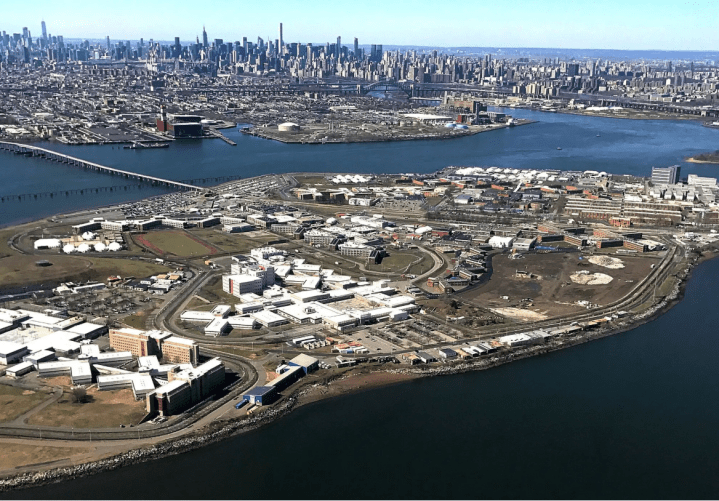
On August 22, Donny Ubiera became the eighth inmate in 2023 to die in custody at Rikers Island. According to a neighboring inmate, at 1:30 am Ubiera was banging on his cell walls, screaming that he could not breathe– correction officers did not enter his cell until 5 am.
Ubiera died twelve days after Judge Lauren Swain agreed to hear arguments on placing Rikers Island Prison under a Federal receivership. A federal receiver is a court-appointed independent expert who takes over state or local administration of a property if there is reasonable cause to believe it is dangerously mismanaged. For the past decade, New York City has failed to manage Rikers Island: the inmates at Rikers Island cannot wait any longer and neither can the city’s collective conscience. The receiver would assume control while the city continues with their plan to close Rikers Island by 2027, which many argue is unrealistically quick.
At Rikers Island, absent employees, starving inmates, “fight night” brawls, and rising death tolls have become standard. The courts and the community have been patient as Mayors Bloomberg, De Blasio and now Adams have tried to reform Rikers Island, but the recent string of deaths galvanized the public and federal government to push for a receivership.
Federal receivers have a greater ability to reform local institutions. According to Hernandez D. Stroud, an attorney and law professor who studies prison oversight, “freedom from bureaucratic morass is partly why receivers, answerable only to the court, usually make progress where agencies simply can’t.” The roadblocks that halt local government initiatives are nonissues with receiverships. Provisions often allow receivers to “petition the court to waive any state laws, contracts or regulations that may impede the receiver’s work.” They are not bound by political obligations, capital, or reputation; they are not under pressure to appeal to specific constituencies or win elections, eliminating a significant obstacle mayors, governors, and department heads face.
Opponents should view a receivership as a pragmatic lifeline for municipal agencies rather than a “big government” taboo. New York City is managing a housing shortage, migrant crisis, and underfunded city programs. The city does not have the adequate time, resources, or budget to devote the proper attention to the Rikers Island crisis. Receivers only have one problem to manage– not an entire city.
Although uncommon, receiverships are not experimental policy. In 2007 Earl Dunlap was put in charge of an outdated, abusive, and inhumane Cook County detention center. He terminated 100 unqualified officers, revamped their training system, and initiated new behavioral approaches for detainees. In 1976, a federal judge placed Alabama’s entire prison system under a receivership. In 1995, federal Judge William B. Bryant put the medical and psychiatric systems in the District of Columbia Jail under a receivership after years of uncontrollable suicide rates, tuberculosis, and AIDS. By the end of the five-year receiver period, suicides stopped and tuberculosis cases were under control.
Federal takeover was never designed to be a first line of defense; local actors are meant to administer their institutions, as they are more engaged, knowledgeable, and involved in the community. However, unconstitutional incompetence requires higher intervention. Mayor Eric Adams said in early 2022 that the city needed the opportunity to implement its reform plan for Rikers Island. It has been about two years, and New York City Council members have said the situation has “vastly improved” with “‘freshly painted walls’” and “‘working locks,'” Yet, the chaos, violence, and death count that line the walls of Rikers only increased.
A federal takeover would not be a failure for the Adams administration, past mayoral offices, or city actors. Their failure is a refusal to hand over control in order to save face, prioritizing power over humanity, decades of neglect, and unpromising promises. Reform is an empty word until action gives it meaning. When inadequacy becomes inhumane, the Federal government must take over.
 Devyn Novikoff