
After a successful vote to ratify, CFU-UAW is preparing to start initial contract negotiations with NYU administration.
By, Devyn Novikoff
October 7, 2024
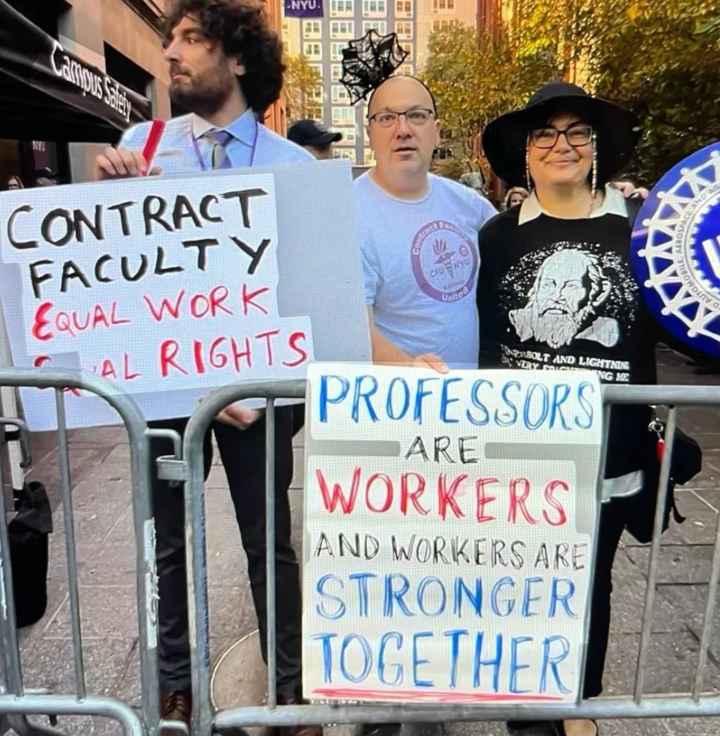
They are a union that knows what it wants. Contract Faculty United (CFU-UAW), New York University’s (NYU) contract faculty union, will approach the negotiation table with NYU management for its first contract on Nov 1.
The union, which ratified its bargaining goals with a 99 percent approval vote on Sept. 30, demands increased faculty compensation and benefits, better working conditions, academic freedom, and job security.
“[Contract faculty] want to stand together to improve our jobs, improve our lives, and improve the university,” said Jacob Remes, a clinical professor at NYU and member of CFU-UAW’s bargaining committee.
Contract professors, who are full-time, non-tenured employees, make up more than half of NYU’s faculty body, according to Remes. The union aims for faculty contracts that reflect the “work and value” they contribute to the university, as “our [faculty] working conditions are student learning conditions,” Remes said.
The union seeks protections of academic freedom in both teaching and research, according to CFU-UAW’s bargaining goals. Professors want to be able to teach and speak according to their “expertise” regardless if it offends donors, deans, or university presidents, said Remes. Contract faculty are at “the heart of the academic freedom crisis,” as they do not have tenure to protect them from termination, Remes said.
“Academic freedom is in crisis at this university right now,” Remes said.
NYU has been the subject of both campus-wide and national criticism after the Foundation for Individual Rights and Expression (FIRE), a non-profit civil liberties organization, ranked the university third to last out of 251 college campuses in an annual free speech evaluation.
CFU-UAW is just one group with demands for NYU administration, with many student groups and unions protesting NYU’s amended anti-discrimination policy. GSOC-UAW, the union that represents graduate students, sent a letter to the administration demanding the removal of “Zionist” as protected speech.
Lauren, a junior at NYU studying psychology who requested anonymity, feels that the speech restrictions implemented by administration are necessary not only for students but “especially” for faculty.
“Academic freedom is important, but in the end, professors need to be held accountable to ensure that every student feels safe in their classroom, which certain speech doesn’t facilitate,” Lauren said.
However, academic freedom is only one of the union’s central bargaining points. A salary increase is a primary goal of many union members, said Carley Moore, a clinical writing professor at NYU and union member.
“We’ve all been living under economic duress. I have been in this position for 23 years and have never been paid enough to live in New York City just on that one job,” Moore said.
Faculty has mixed expectations surrounding administration’s cooperation during the negotiation process. NYU promised to negotiate in good faith, which Remes has “no worries” that they will uphold.
Still, there are concerns that NYU’s administration is “difficult and resistant to change,” Moore said. Despite its illegality, there have been attempts at changing clinical faculty members’ terms of employment before negotiations, according to Moore.
Ultimately, though, a sense of support and solidarity from their fellow faculty members has left most union members feeling “optimistic” about the negotiations, Remes and Moore said.
“I know that when workers stand together, that’s the way of getting what we need and what we deserve from our bosses,” Remes said.
 Devyn Novikoff